Do you dream of stepping out your front door and onto shaded trails within minutes? If Rock Creek Park tops your wish list, Mount Pleasant might be your perfect match. You want green space without giving up urban convenience, and you need a clear picture of what living on the park’s edge really looks like. This guide breaks down park access, commuting, housing types, outdoor-space features that matter, and a practical checklist to shop with confidence. Let’s dive in.
Rock Creek Park stretches through Northwest DC as a continuous green corridor managed by the National Park Service. From Mount Pleasant, the park’s eastern edge is your backyard in spirit, with paved multi-use paths, unpaved nature trails, and plenty of tree canopy for shade. You can walk, run, bike, or simply sit and listen to the creek.
Residents value the mix of paved and natural trails, the cooler microclimate under mature trees, and grassy spots for informal play or a quiet book. Some park roads close at times for recreation, so you may find weekend mornings especially peaceful for biking or running.
Mount Pleasant is perched on a hill above the park with several points where sidewalks meet trail entrances. You will find the most practical access where neighborhood streets end at the park’s eastern boundary. These are low-key urban trailheads rather than staffed facilities, which keeps entry simple and close to home.
On the neighborhood’s southern edge, the Klingle Valley Trail offers a paved link into the broader Rock Creek network. It is a reliable, car-separated route for walkers and cyclists who want a smooth surface and direct access to north–south trails.
Many trails are unlit and can be slick after rain or snow. Visibility changes with tree cover and daylight, so bring lights if you bike at dawn or dusk. The park also posts seasonal advisories and event closures, so it helps to check updates before long outings.
Mount Pleasant trades a front-door Metro entrance for daily park access, and many residents find that a fair swap.
There is no Metro station inside the neighborhood. The nearest Red, Green, and Yellow Line stations are roughly within a mile or a short bus ride, depending on where you live. Several bus routes run on nearby major corridors like 16th Street NW and Columbia Road, offering direct connections downtown and across the city. Always check current schedules since routes and frequencies evolve.
You can cover most daily needs on foot in the neighborhood core. For commuting, riders often use the Rock Creek trail for a calmer, mostly car-separated north–south path. Others bike or bus down 16th Street. Capital Bikeshare docks and dockless scooters are typically nearby, with availability that changes by block and time of day.
On-street parking can be competitive near the commercial strip and park entrances. Many blocks use Residential Permit Parking rules or time limits. If you own a car, verify the specific RPP setup for your block before you buy.
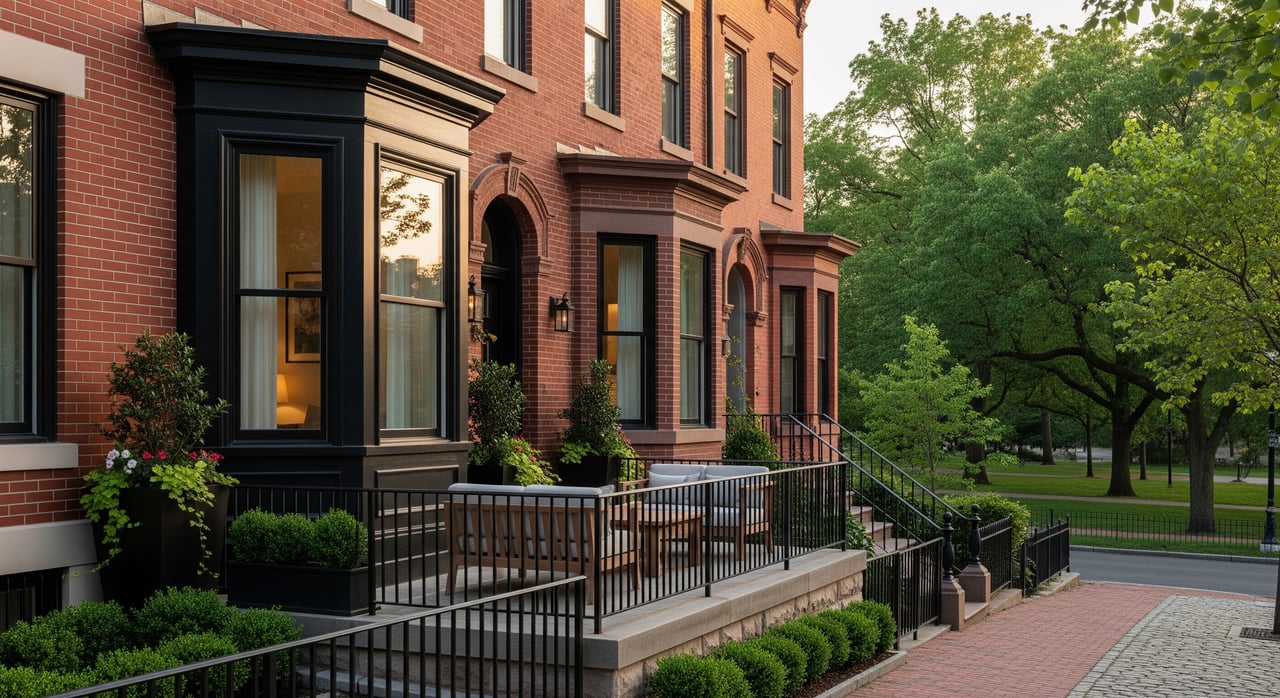
Mount Pleasant is defined by historic rowhouses, a mix of small apartment buildings, and a smaller share of detached or semi-detached homes. Many rowhouses date from the late 1800s to early 1900s, so you will see classic brick facades, front porches, and tree-lined streets.
Much of the neighborhood falls within or near historic districts. That means exterior changes, additions, fences, and landscaping often require review. The tradeoff is a protected streetscape with strong architectural character.
If you want daily access to trails, less traffic on certain blocks, and mature trees, park-edge living can feel like an everyday upgrade. You also get a calmer route for morning runs or an easy place to decompress after work.
In dense neighborhoods where lot sizes are modest, private outdoor features that extend your living space carry extra weight. That is especially true in Mount Pleasant, where the park amplifies the value of a porch, balcony, or roof deck.
You may not need a large yard if you live steps from great public green space. That tradeoff can open more options and help your budget go further. Still, living right on a trail may bring more foot and bike traffic, event noise on busy days, or occasional maintenance activity. Decide if you prefer trail-front energy or a quieter block a few minutes away.
Market studies show ongoing buyer demand for outdoor access and nearby green space. In DC, the exact premium for a park-adjacent home depends on distance, property type, condition, and supply in the micro-market. The most reliable approach is to compare recent sales on park-edge blocks with similar homes a block or two in. A local comp set will help you decide when to stretch and when to hold the line.
Use this quick list to focus your search and avoid surprises:
Living near Rock Creek Park in Mount Pleasant gives you city access with a daily dose of nature. You will trade a few extra minutes to the Metro for morning trail runs and leafy evening walks. If you want a porch to watch the block go by or a deck that doubles as a second living room, this neighborhood can deliver the balance you are after.
Ready to explore the best blocks and compare park-edge premiums with confidence? Schedule your neighborhood consultation with Megan Conway to map out listings, off-market options, and a clear strategy that fits your lifestyle.
With an extensive network at their fingertips, the Conway Group has developed trusted relationships to provide a streamlined experience from start to finish, while keeping clients at the forefront of every step toward success.
Contact UsAddress
5471 Wisconsin Ave., #300
Chevy Chase, MD 20815