Menu

Leave a Message

Thank you for your message. We will be in touch with you shortly.

Choosing Between Condos and Houses in Cleveland Park

02/19/26

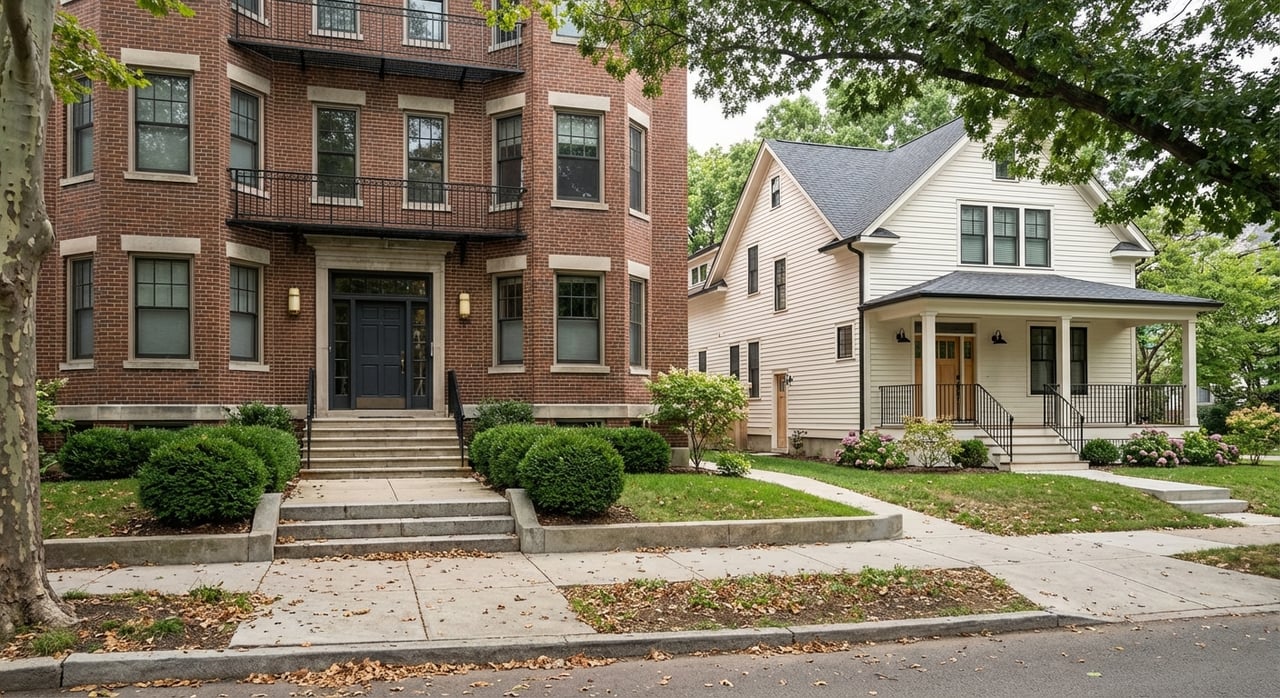
Choosing between a condo and a house in Cleveland Park often comes down to how you want to live day to day. Do you picture a low‑maintenance home steps from the Red Line and Connecticut Avenue, or do you see yourself in a classic home with a yard on a leafy side street? Both options are strong in this neighborhood, and the right fit depends on your budget, space needs, and how much maintenance you want to take on. In this guide, you will compare costs, space, transit access, schools, and key financing and permitting steps so you can decide with confidence. Let’s dive in.

Cleveland Park at a glance

Cleveland Park sits along Connecticut Avenue in Northwest DC with a Red Line Metro stop at its center. The neighborhood blends historic single‑family homes with garden and mid‑rise condo buildings, all within short blocks of shops and restaurants. Walk Score rates the area in the 70s for walkability and shows strong transit access, which aligns with the daily experience here if you prefer to get around without a car. You can review the neighborhood’s walk and transit profiles on the Walk Score page for Cleveland Park for a quick snapshot of the area’s mobility strengths. Check the current Walk Score profile.

The Cleveland Park Metro station sits on WMATA’s Red Line and has entrances on Connecticut Avenue. There is no Metro park‑and‑ride lot at this station, so buyers who plan to drive daily may prioritize on‑site or street parking options. See station details on WMATA.

Market snapshot: prices and what they mean

Neighborhood data varies by source and time window, so always note the site and the date.

  • Redfin reported a median sale price of about $650,000 for Cleveland Park in a January 2026 one‑month snapshot. This reflects recent closing prices and a “somewhat competitive” market.
  • Zillow’s Home Value Index for Cleveland Park showed a typical home value around $667,087 with data through December 31, 2025. The ZHVI is a modeled index across property types.
  • Realtor.com’s neighborhood overview around December 2025 displayed a median in the $500,000 to $505,000 range and a median price per square foot in the mid‑$500s.

These differences come from what each site measures. Some report recent sold prices, others track active listing prices, and some use models that smooth trends. Use address‑level comps for a specific decision, especially because condo buildings and single‑family streets can trade in very different price bands.

Condos vs houses: how living feels day to day

Space and privacy

  • Condos along Connecticut Avenue and nearby side streets typically range from studios to 2‑bedrooms, often about 500 to 1,300 square feet. Many buildings offer elevators and secure entries, with limited private outdoor space.
  • Single‑family homes and larger semi‑detached houses provide more interior square footage, private yards, and room for expansion. These homes commonly sell well above $1 million and carry higher ongoing costs, but they deliver space and privacy that a condo usually cannot.

If you need multiple bedrooms, a yard, or future renovation potential, a house on a side street is the more likely match. If you want a simpler footprint that keeps you close to transit and shops, a condo near Connecticut Avenue will feel very convenient.

Maintenance and monthly costs

  • Condos: You will have a monthly association fee. In DC, Census-based reporting places the median HOA or condo fee around $505 per month. Fees vary by building and amenities, and they usually cover exterior maintenance, building systems, common‑area insurance, reserve contributions, and sometimes some utilities. Always review the building’s current budget, reserve study, and recent meeting minutes to confirm fee stability.
  • Houses: You cover all exterior and systems upkeep. A common planning rule is to set aside about 1 percent of the home’s value per year for maintenance. For example, on a $1.5 million home, that is about $15,000 annually as a long‑term reserve. You can read more about this rule of thumb here: annual maintenance budgeting guidance.

Bottom line: Condos shift more costs into a predictable monthly fee and reduce hands‑on maintenance, while houses require a separate reserve but give you full control over how and when work gets done.

Commute, walkability, and parking

If you want a car‑light lifestyle, condos near the Red Line and Connecticut Avenue put you close to the Metro, groceries, and dining. Review WMATA’s station page for access details and hours. If you drive often, confirm whether a condo includes a deeded parking space and whether guest or street parking aligns with your routine.

Houses on the side streets often offer more street parking and sometimes driveways, but availability varies by block. Compare your daily travel patterns to each address before you commit.

Schools and family logistics

Cleveland Park’s neighborhood public elementary is John Eaton Elementary, a community anchor with an updated campus. DC Public Schools feeder patterns have seen changes in recent years, so always verify your exact school assignment by address with DCPS resources. You can start with Eaton’s profile here: DCPS profile for John Eaton Elementary.

Several private schools are also within a short drive or commute. If you plan private enrollment, factor in the exact route, parking, and drop‑off logistics during your search.

Financing and risk: why condos can differ

Financing a condo often includes an extra layer of project review. Lenders check the building’s financial health, reserves, insurance, owner‑occupancy ratios, and any litigation before approving many loans. If a project does not meet agency standards, your mortgage options may be more limited or more expensive. You can learn how lenders check condo eligibility using Fannie Mae’s Condo Project Manager tool: Fannie Mae Condo Project Manager and the agency’s project standards: Fannie Mae project standards overview.

Condo buyers should request the HOA budget, reserve study, three years of financials, and recent meeting minutes. Look for evidence of healthy reserves and a maintenance plan that fits the building’s age. This helps you assess special assessment risk and how fees might change.

Historic district and renovations

Cleveland Park includes a designated local historic district. If you buy a house inside the district, most exterior alterations will require review and approval by the DC Historic Preservation Office and possibly the Historic Preservation Review Board. This can affect timelines, permitted materials, and cost. To explore homeowner guidance, start here: DC Historic Preservation Office brochures.

If you are planning an addition or significant site work, you should also check zoning at the address level to confirm what is allowed. The DC Office of Zoning provides resources and FAQs on permits and zoning lookups: DCOZ zoning resources.

Costs you should model upfront

  • Property taxes: DC’s effective residential tax rate is generally around 0.85 percent of assessed value, with published changes from recent legislation. Always apply the current year’s rates to the assessed value and confirm with the Office of Tax and Revenue. You can review DC’s recent tax updates here: District of Columbia tax changes overview.
  • Insurance: Condo insurance usually covers personal property and interior improvements, while the HOA’s master policy covers common areas. House policies cover the full structure and site. Compare quotes early.
  • Utilities: Some condo fees include heating, cooling, water, or gas. Houses typically carry separate utility bills. Ask for 12 months of history for apples‑to‑apples comparison.
  • Maintenance reserves: Use the building’s reserve study for a condo, and the 1 percent rule for a house, then adjust for property age and condition.

Which is right for you?

Here are quick profiles to help you align the choice with your lifestyle.

  • You want a simple, transit‑first routine: A condo steps from the Red Line and Connecticut Avenue is a great fit. You value a predictable monthly fee and prefer not to manage exterior work. You still get access to parks and neighborhood amenities.
  • You want space to grow and a yard: A single‑family house or semi‑detached home on a quieter street will serve you better. You can plan long‑term upgrades and enjoy private outdoor space, knowing you will carry higher maintenance and tax costs.

Decision checklist

Use this shortlist to make a confident call between a condo and a house in Cleveland Park.

  • Budget the full monthly number: mortgage, taxes, insurance, HOA fee if applicable, and a maintenance reserve.
  • Confirm transit and parking: distance to Metro, bus lines, bike storage, and on‑site or street parking rules.
  • Review condo documents: HOA budget, reserves, reserve study, meeting minutes, insurance, and any litigation. Confirm project eligibility if you need conventional financing using resources like Fannie Mae Condo Project Manager.
  • Plan for house maintenance: use the 1 percent annual rule, then adjust for roof, HVAC, and age‑related items.
  • Verify schools by address: start with John Eaton Elementary’s DCPS profile and complete an address‑level lookup with DCPS.
  • Confirm historic and zoning status: if you are eyeing renovations, review the HPO homeowner brochures and check DCOZ zoning resources for your exact lot.

When you compare Cleveland Park condos and houses through this lens, the path usually becomes clear. If you want walk‑everywhere convenience with minimal upkeep, focus on buildings near the Metro. If you want long‑term flexibility and a yard, explore the historic streets just off the Connecticut Avenue spine.

Ready to weigh your options with hyperlocal insight and a clear plan? Let’s talk about your goals, timing, and budget so we can target the right home on the right block. Schedule your neighborhood consultation with Megan Conway.

FAQs

What are typical prices for condos vs houses in Cleveland Park?

  • Recent neighborhood snapshots show many condos trading in the mid‑$100Ks to high‑$500Ks and detached or larger homes often selling at $1 million and above. Always check address‑level comps for the exact building or block and note the data date.

How do HOA fees affect mortgage approval for a Cleveland Park condo?

  • Lenders include the monthly HOA fee in your qualifying payment, so higher fees can reduce loan capacity; they also review the building’s reserves, insurance, and other project metrics for eligibility under agency standards like those in Fannie Mae’s project guidelines.

How much should I budget for house maintenance in Cleveland Park?

  • A common planning rule is about 1 percent of the home’s value per year, which would be roughly $15,000 annually on a $1.5 million home; adjust for age and recent system upgrades using your inspection and vendor quotes.

Does the Cleveland Park Metro station have parking?

  • No, there is no park‑and‑ride lot at the Cleveland Park Red Line station; confirm your parking plan at the property level and review WMATA’s station page for service details.

Do historic district rules affect house renovations in Cleveland Park?

  • Yes, exterior work on homes inside the local historic district often requires review and approval by the DC Historic Preservation Office and possibly the HPRB; review homeowner guidance and plan timelines accordingly using HPO’s brochures.

Work With Us

With an extensive network at their fingertips, the Conway Group has developed trusted relationships to provide a streamlined experience from start to finish, while keeping clients at the forefront of every step toward success.

Contact Us