Wondering whether Adams Morgan or Kalorama is the better fit for your next condo? If you are torn between lively streets and quieter residential blocks, you are not alone. These two Northwest DC neighborhoods sit close together, but they can offer very different day-to-day experiences, building styles, and price points. Here is how to compare them so you can focus your search with confidence. Let’s dive in.
If you want a quick read, Adams Morgan is generally the more mixed-use, energetic option. DC planning describes it as eclectic, dense, central, and well connected, with a commercial corridor shaped by shops, restaurants, and bars.
Kalorama, by contrast, is more residential in feel. Planning and preservation materials describe Kalorama Triangle as quiet and almost exclusively residential, while Sheridan-Kalorama is known for its hilly, tree-lined streets and strong historic character.
That difference matters when you are buying a condo. In simple terms, Adams Morgan often appeals to buyers who want activity close at hand, while Kalorama often appeals to buyers who want a calmer setting with historic architecture and a more tucked-away feel.
Adams Morgan has a broad mix of housing types rooted in late-19th-century rowhouses, early-20th-century apartment buildings, and a long-standing commercial core. In today’s condo market, that often translates into a wider mix of unit types and more opportunities to find newer or updated buildings with modern amenities.
Current listing examples support that pattern. Redfin’s Adams Morgan condo snapshot shows condos for sale ranging from smaller, lower-priced units to larger renovated homes, with some newer buildings offering features like garages and terraces.
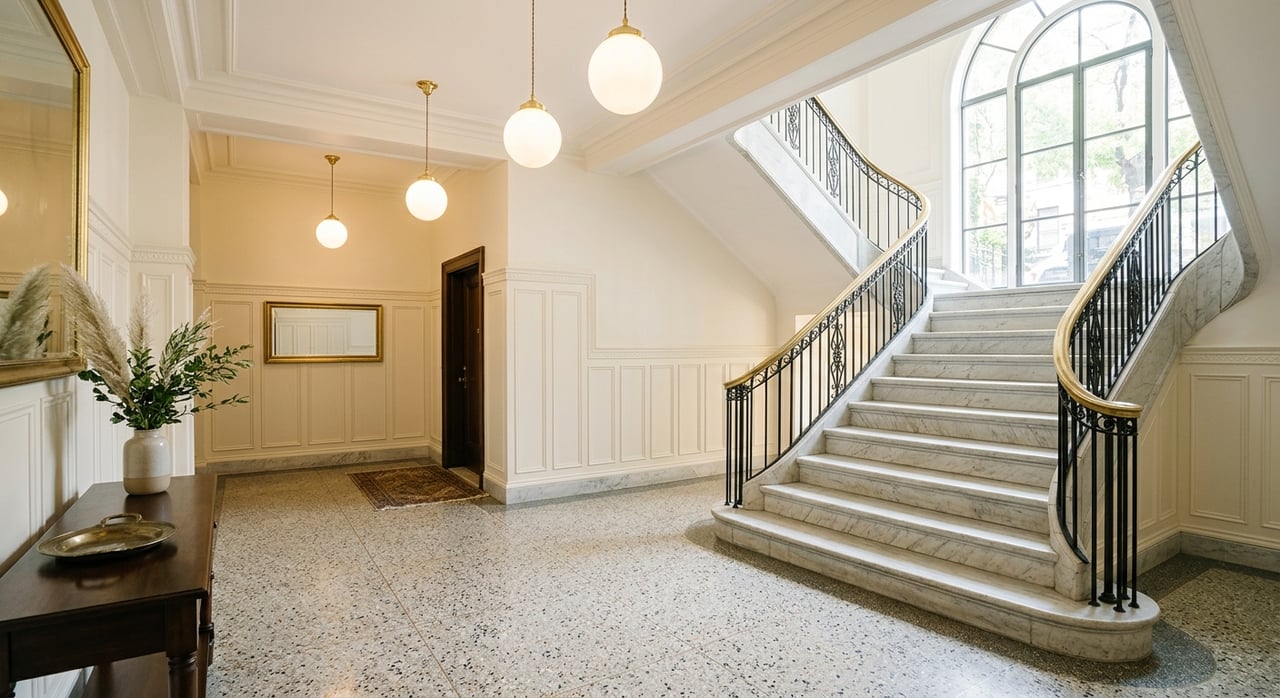
Kalorama tends to lean older, smaller-scale, and more residential. Preservation and planning materials point to late-19th- and early-20th-century dwellings and apartment buildings, especially in Kalorama Triangle, along with historically significant homes and buildings in Sheridan-Kalorama.
For condo buyers, that can mean boutique buildings, classic details, and a lower-density feel. It can also mean older building systems, more variation from one address to the next, and fewer amenity-heavy buildings than you may find in a more mixed-use neighborhood.
One of the clearest gaps between these neighborhoods is pricing. Zillow’s April 30, 2026 neighborhood benchmarks place Adams Morgan’s typical home value at $583,404, compared with $1,373,334 in Kalorama.
That is not a condo-only comparison, but it helps frame the broader market. It suggests that Kalorama generally sits at a much higher value level, even though both neighborhoods can still offer entry-point condo opportunities.
Redfin’s Adams Morgan condo page shows 65 condos for sale with a median listing price of $500,000. Visible listings range from $279,500 for a smaller unit to $1,235,000 for a larger renovated three-bedroom home.
That range can be helpful if you are looking for flexibility. You may find a first home, a one-bedroom with lower carrying costs, or a larger condo with more upgraded finishes depending on your budget.
Redfin’s Sheridan-Kalorama condo page shows a wide spread of visible listings, including homes at $325,000, $359,000, $475,000, $565,000, $725,000, $875,000, $925,000, $1,050,000, and $1,275,000.
So yes, there are lower-priced condos in Kalorama. But the broader benchmark is still much higher, and inventory is thinner. Zillow shows 14 for-sale listings in Kalorama versus 112 for-sale listings in Adams Morgan, which can affect your options and negotiating leverage.
A condo’s sticker price is only part of the affordability picture. Monthly HOA dues can meaningfully affect what you can comfortably spend.
The Consumer Financial Protection Bureau notes that condo and HOA dues are usually paid separately from your mortgage and can range from a few hundred dollars a month to more than $1,000. The same guidance warns buyers to factor those dues into affordability from the start.
In Adams Morgan, current listing examples show HOA dues around $488 to $540 per month in some newer 2000s buildings. In Kalorama Triangle, one listing at 2410 20th St NW #210 shows $719 per month in a 1926 boutique building.
These are examples, not neighborhood averages. Still, they show how dues can shift based on a building’s age, size, services, and reserve needs.
DC’s Department of Insurance, Securities and Banking has noted that condominium associations often do not have large reserves to absorb prolonged non-payment, especially in smaller associations. DISB testimony also notes that assessment delinquencies can affect basic services, insurance, and financing.
That is why it is smart to look beyond the monthly number. You want to understand what the dues cover, whether the association appears financially stable, and whether the building may face future special assessments or budget pressure.
DC DHCD’s Condo Association Bill of Rights says owners have the right to attend meetings, observe most association meetings, inspect books and records, and request a statement of unpaid assessments. Those rights can be especially useful when you are reviewing a resale package and trying to understand how a building is run.
For buyers, this is not just paperwork. It is part of understanding the health of the community you are joining.
If you are drawn to Kalorama for its architecture, that same historic character can also shape what you can change. DC planning states that work affecting the exterior appearance of a historic property requires historic preservation review.
Major changes such as front alterations, significant window or door changes, roof decks visible from the street, new porches, and some additions may require review by the Historic Preservation Review Board. If you are dreaming about custom windows, rooftop improvements, or exterior HVAC screening, this is an important part of your due diligence.
Adams Morgan can include historic housing too, but historic-preservation review is a particularly important watch item in Kalorama because the neighborhood’s identity is so tied to preserved building character. For some buyers, that is part of the appeal. For others, it is a practical constraint that should be weighed early.
Adams Morgan planning materials emphasize strong transit connectivity, and WMATA says Woodley Park-Zoo/Adams Morgan is a short walk from Adams Morgan. The neighborhood also offers access to retail, dining, and nearby parks including Rock Creek Park, Kalorama Park, Marie Reed, and Meridian Hill Park.
If your ideal routine includes coffee shops, restaurants, and neighborhood activity within easy reach, Adams Morgan has a lot going for it. It tends to offer a more built-in, urban lifestyle.
For many Kalorama addresses, Dupont Circle is a likely rail anchor. WMATA lists Dupont Circle station at 1525 20th Street NW, and preservation materials note Kalorama Triangle’s relationship to Connecticut Avenue and Dupont Circle.
The feel, though, is different from Adams Morgan. Kalorama is more likely to trade immediate retail density for tree-lined streets, historic buildings, and a more residential rhythm, while still being near walkable commercial areas.
This may be the most personal part of the decision. Adams Morgan’s official planning documents directly connect the neighborhood with nightlife, bars, restaurants, and a lively commercial core.
Kalorama Triangle, on the other hand, is described as having a quiet residential ambience and being screened from more hectic commercial areas. If noise sensitivity is high on your list, this is one of the sharpest contrasts between the two neighborhoods.
That does not make one better than the other. It just means your best choice depends on how you want your home to feel at the end of the day.
When you tour condos in Adams Morgan and Kalorama, avoid judging only by square footage or list price. In these neighborhoods, value often comes down to the building itself, the exact block, layout efficiency, monthly dues, and how the property fits your lifestyle.
A smart comparison checklist includes:
In neighborhoods this nuanced, block-level guidance matters. Two condos with similar asking prices can offer very different long-term value depending on the building and setting.
If you are weighing Adams Morgan against Kalorama, the right answer is usually less about which neighborhood is “best” and more about which one feels most aligned with how you actually want to live. If you want help pressure-testing the tradeoffs, Megan Conway can help you compare buildings, blocks, and monthly costs with a neighborhood-first lens.
With an extensive network at their fingertips, the Conway Group has developed trusted relationships to provide a streamlined experience from start to finish, while keeping clients at the forefront of every step toward success.
Contact UsAddress
5471 Wisconsin Ave., #300
Chevy Chase, MD 20815