Trying to choose between Chevy Chase, DC and Chevy Chase, MD? You are not alone. On a map, the two can look almost interchangeable, but for a buyer, the differences can affect your taxes, commute, home style, and even which public school boundary applies to a specific address. If you want a clearer way to compare the two sides of Chevy Chase before you make a move, this guide will walk you through the practical differences that matter most. Let’s dive in.
The border between Chevy Chase, DC and Chevy Chase, MD is more than a state line. It is also a governance line, which means the rules, taxes, and local systems on each side are different.
In DC, Chevy Chase is part of Upper Northwest and Ward 3. According to the DC Office of Planning’s Ward 3 overview, it developed along the Connecticut Avenue streetcar line and includes a commercial core with surrounding apartment, townhouse, and single-family housing.
On the Maryland side, Chevy Chase is not one single local government. Montgomery County’s tax schedule identifies multiple municipalities and districts in the Chevy Chase area, including places such as Chevy Chase Village, the Town of Chevy Chase, North Chevy Chase, Chevy Chase View, and Friendship Heights. That means when someone says “Chevy Chase, MD,” they may be describing several different local setups rather than one uniform place.
If you are comparing monthly and long-term ownership costs, taxes deserve a close look. The broad direction may feel similar, but the structure is not.
In DC, the current residential Class 1A property tax rate is $0.85 per $100 of assessed value. DC also applies deed recordation and deed transfer taxes at 1.1% for residential property below $400,000 and 1.45% above that threshold.
In Montgomery County, property taxes are layered differently. The county explains that your bill can include state, county, and municipal rates, and the county’s levy schedule shows that total rates in Chevy Chase-area districts can vary depending on the exact municipality or district. On the Maryland side, your address can change the tax picture in a way that is less uniform than many buyers expect.
Income taxes differ too. Montgomery County residents pay Maryland’s graduated state income tax plus the county’s 3.20% local income tax, while DC residents pay DC’s own graduated resident income tax structure. For some owner-occupants in Montgomery County, the Income Tax Offset Credit may also apply.
Before you compare two homes across the line, it helps to look beyond list price. You will want to confirm:
School paths are one of the biggest reasons buyers compare Chevy Chase, DC and Chevy Chase, MD. The key point is simple: the exact address matters more than the mailing label.
On the DC side, the current DCPS feeder pattern shows Lafayette Elementary School feeding to Deal Middle School and then Jackson-Reed High School. Lafayette’s profile places it within the Hawthorne, Barnaby Woods, Chevy Chase neighborhood cluster.
On the Maryland side, MCPS service area maps include schools such as Chevy Chase Elementary, North Chevy Chase Elementary, Rosemary Hills/Chevy Chase Elementary, Westland Middle, and Bethesda-Chevy Chase High. But those assignments are boundary-based and can change when maps are updated.
Because Chevy Chase, MD is split among multiple towns, villages, and county districts, it is especially important not to assume a school path based on a mailing address alone. A home that looks like it is in the same general area as another may not share the same school assignment.
If your daily routine includes Metro, bus access, or a shorter car-light lifestyle, the two sides of Chevy Chase can feel noticeably different.
In DC, Chevy Chase is closely tied to the Connecticut Avenue corridor. The Chevy Chase Civic Site RFP notes that Friendship Heights Metro is the closest station to that site and references L2 and E4 bus service. DC planning materials also describe the neighborhood as a set of villages that grew around local commercial centers along the former streetcar line.
On the Maryland side, Montgomery Planning says the Maryland portion of Friendship Heights is served by a WMATA Red Line station and includes mixed-use, higher-density development. At the same time, many Maryland-side homes sit farther from the main corridor in a more detached-home pattern.
Based on those official planning descriptions, the DC side generally reads as more transit-oriented, while many parts of Chevy Chase, MD may lean more heavily on driving or bus connections depending on the block.
One of the biggest surprises for buyers is how different the housing fabric can feel once you cross the line.
In DC, the Chevy Chase small area plan describes the neighborhood as predominantly residential, with a low-density commercial corridor on Connecticut Avenue, apartment buildings south of Livingston Street, and side streets with attached and semi-detached homes on tree-lined blocks. The plan also notes that no new apartments or condominiums had been built there in recent decades, even as the area remained a small-town-style commercial and civic center.
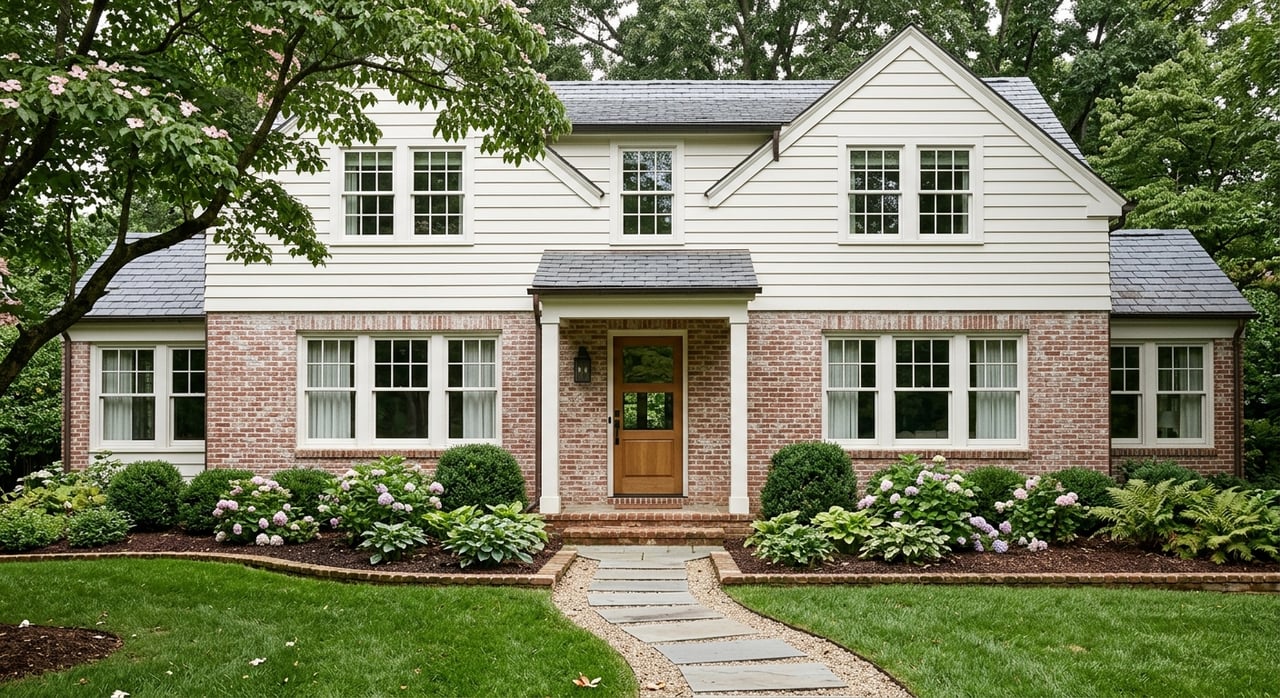
In Montgomery County, Chevy Chase is described by Montgomery Planning’s historic resources as a turn-of-the-century suburban archetype with strong landscape and architectural standards. The area includes many single-family detached homes, especially along interior residential streets.
That said, the Maryland side is not one housing type. Planning materials note that Chevy Chase Lake includes detached homes, townhouses, low-rise apartments, and senior-oriented multifamily buildings, while Friendship Heights has a more mixed-use and urban form. So if you think “Chevy Chase, MD” means only large detached houses, the actual picture is more varied.
| Topic | Chevy Chase, DC | Chevy Chase, MD |
|---|---|---|
| Government structure | Part of DC Ward 3 | Multiple municipalities and districts in Montgomery County |
| Property taxes | Uniform DC rate structure | Varies by state, county, and municipal layers |
| Income taxes | DC resident income tax | Maryland state tax plus Montgomery County local tax |
| School system | DCPS feeder pattern | MCPS boundary-based assignments |
| Transit feel | More tied to Connecticut Ave corridor | Varies widely by block and municipality |
| Housing pattern | Residential with attached, semi-detached, apartments near corridor | More detached-home fabric overall, plus mixed-use nodes |
If you are thinking about future housing mix and neighborhood evolution, the DC side may see more visible change in the near term.
According to a January 2026 announcement from the DC Mayor’s office, officials selected a proposal to redevelop the Chevy Chase Civic Site with a new library, community center, and 177 units of affordable and market-rate housing. That does not redefine the whole neighborhood overnight, but it does point to added housing diversity over time near the civic core.
By comparison, many nearby residential blocks on both sides of the line remain defined by long-established housing patterns. For buyers, that means the immediate streetscape may feel stable, while selected nodes, especially in DC, may evolve more visibly.
For many buyers, this comes down to lifestyle fit more than a simple “better or worse” choice.
Chevy Chase, DC may be the cleaner fit if you want a slightly more urban feel, a more obvious commercial core, and DC’s tax and school systems. It can also be appealing if you value being closely tied to the Connecticut Avenue corridor and nearby transit connections.
Chevy Chase, MD may be the better match if you want a more classic suburban street pattern, more detached-home options, and Montgomery County’s systems. But the biggest takeaway is that the Maryland side is not uniform. Taxes, municipal overlays, and school assignments can change from one area to the next, so the exact address matters.
If you are comparing homes on both sides of the line, the smartest approach is to evaluate each property in context, not just by ZIP code or mailing address. If you want help sorting through the block-by-block differences in Chevy Chase, DC and Chevy Chase, MD, connect with Megan Conway for a personalized neighborhood consultation.
With an extensive network at their fingertips, the Conway Group has developed trusted relationships to provide a streamlined experience from start to finish, while keeping clients at the forefront of every step toward success.
Contact UsAddress
5471 Wisconsin Ave., #300
Chevy Chase, MD 20815