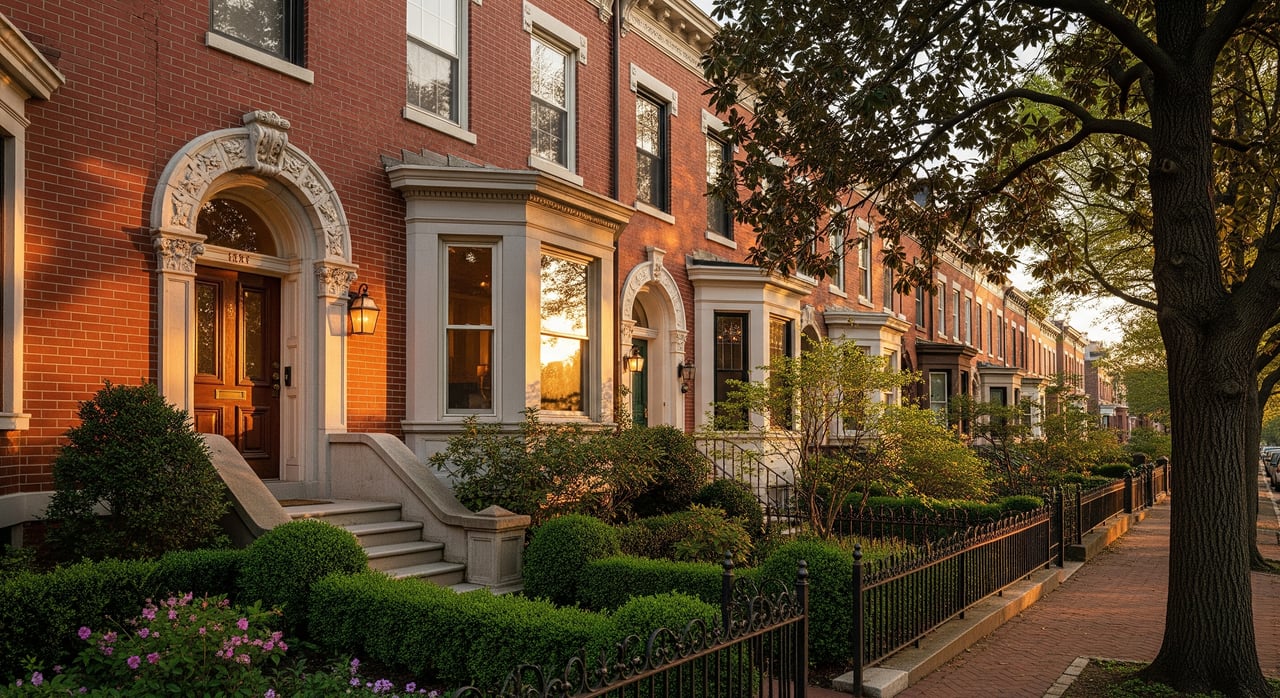
Have you ever walked down a tree‑lined street in Cleveland Park and wondered why one house has half‑timbered gables while the next has a perfect brick facade with a centered door? If you love character homes, you know those details matter when you buy or prepare to sell. This guide helps you quickly spot the neighborhood’s hallmark styles, understand typical floor plans and systems, plan light updates that keep the charm, and navigate historic review with confidence. Let’s dive in.
Why Cleveland Park looks this way
Cleveland Park took shape as a streetcar suburb in the late 19th and early 20th century. As transit improved along Connecticut Avenue, developers built for growing middle and upper‑middle‑income demand. You see that history in the mix of detached houses, rowhouses, semidetached homes, and early apartments from the 1890s through the 1930s.
Many blocks are part of a designated historic district. Exterior changes that are visible from the street often require permits and review. If you plan to alter porches, rooflines, or windows, consult the DC Historic Preservation Office early to avoid delays and rework.
Spot the style on the street
Use these visual cues to identify the home in front of you and anticipate its layout and features inside.
Queen Anne
- Exterior cues: Asymmetrical facades, cross‑gables, bay windows, patterned shingles or mixed cladding, and wraparound or full‑width porches with turned posts. Some include towers or turrets and decorative brackets.
- Interior cues: Irregular room shapes, formal parlors, tall ceilings, decorative woodwork and staircases, and sometimes stained glass.
- Era: Late 19th to early 20th century, often the neighborhood’s earliest homes.
Colonial Revival / Georgian Revival
- Exterior cues: Symmetrical fronts, centered entry with a pediment or small columned portico, multi‑pane double‑hung windows, and brick or clapboard siding with classical cornices.
- Interior cues: Formal entry hall with central stair, balanced living and dining rooms, mantels with classical detailing, and occasional built‑ins.
- Era: A dominant early‑20th‑century suburban style in Cleveland Park.
Tudor Revival
- Exterior cues: Steeply pitched intersecting gables, decorative half‑timbering with stucco infill, tall narrow windows, arched or recessed entries, and brick or stone at lower walls.
- Interior cues: Exposed beams in some rooms, leaded glass, cozy nooks, and upper floors shaped by steep rooflines and dormers.
- Era: Common from the 1920s through the 1930s.
Wardman houses and rowhouses
- Context: “Wardman” refers to types popularized by developer Harry Wardman and peers. Think well‑crafted masonry facades and efficient layouts on urban lots.
- Exterior cues: Brick facades with projecting bays, modest or classical details, stoops or small porches, and a rhythmic, uniform appearance across a block.
- Interior cues: Deeper floor plans with a parlor‑to‑dining sequence, original moldings, and woodwork that often remain intact.
- Era: Early 20th century across DC, including Cleveland Park.
American Foursquare
- Exterior cues: Boxy two‑story form, hipped roof with a central dormer, and a broad front porch. Details can be classical or Craftsman‑inspired.
- Interior cues: Efficient four‑room plan per floor, good ceiling heights, and simple trim.
- Era: Early 20th century, often on side streets and corner lots.
Craftsman / Bungalow
- Exterior cues: Low‑pitched gables, exposed rafters, and tapered porch columns on piers.
- Interior cues: Built‑ins, open or semi‑open main floor, and warm woodwork.
- Era: Early 20th century and often on quieter blocks.
Floor plans and daily flow
Most houses here follow a traditional sequence: entry or foyer, then a formal living room facing the street, a formal dining room near the center, and the kitchen at the rear. Many have small rear additions, back stairs, or butler’s pantries.
Upper floors usually include bedrooms and one or two baths, with some attic conversions creating bonus rooms. Wardman rowhouses often have basements, sometimes with English basements at the front and yard space at the back.
Expect high ceilings, plaster walls, original moldings, picture rails, built‑ins, and wood‑mantled fireplaces. Mechanical systems have typically been modernized, though some homes still have radiators and elements like older wiring or galvanized plumbing. If you see intact period details in the public rooms, that is a strong sign of value for today’s buyers.
What today’s buyers value
You get the strongest response when you combine preserved character with modern comfort.
- Character: Original staircases, trim, mantels, stained glass, and built‑ins
- Modernized spaces: Updated kitchens and baths with durable finishes and open sightlines where appropriate
- Systems: Central air or high‑efficiency HVAC, updated electrical service, safe plumbing, and improved insulation
- Extra space: Finished lower levels with legal egress, attic conversions, or thoughtful additions that respect the front facade
- Outdoor living: Private gardens, patios, and discreet off‑street parking when possible
- Location: Proximity to the Cleveland Park Metro, Connecticut Avenue retail, parks, and schools supports lifestyle and value
Light updates that keep the charm
Small, targeted improvements can make a big impact without erasing history. Focus on reversible changes and material matches.
Kitchens that fit the house
- Open sightlines between kitchen and dining by adjusting non‑load‑bearing walls while keeping defining trim or archways.
- Use shaker or inset cabinetry, simple hardware, and classic tile like subway or small hex.
- Refinish hardwoods or match width and species if replacing sections.
Bathrooms with timeless pattern
- Choose classic tile patterns such as subway, penny, or basketweave paired with modern fixtures.
- Add or enlarge baths by borrowing closet space instead of pushing out the envelope.
Windows and energy comfort
- Repair original sashes, reglaze, and weatherstrip. Add interior or exterior storms for comfort and noise reduction.
- Replace only where necessary, and match the original sightlines and operation.
Basements and attics done right
- Ensure moisture control, headroom, and code‑compliant egress before finishing.
- Keep finishes simple so original and new spaces remain legible.
Exterior care and curb appeal
- Restore porches with matching profiles and materials.
- Repaint with historically appropriate palettes and repoint masonry with compatible mortar.
- Add subtle landscape lighting or low fences that complement the home’s style.
Invisible but essential systems
- Right‑size HVAC for the house. Consider mini‑splits to avoid invasive ductwork.
- Upgrade electrical service to modern capacity and tidy panel locations.
- Add insulation in attics and crawlspaces while avoiding trapped moisture.
Preservation, permits, and process
If your block is inside the historic district, visible exterior work like porch repairs, roof changes, or facade window replacements often needs review and permits. Contact the DC Historic Preservation Office early in your planning. This step streamlines approvals and helps you avoid costly do‑overs.
For larger projects, engage a preservation‑minded architect, a contractor with restoration experience, and a structural engineer for any load‑bearing changes. Permits are required for additions, structural work, major mechanicals, and many exterior alterations. Incentives for owner‑occupied historic homes can be limited, but programs evolve. It is worth checking periodically for grants or energy‑upgrade support.
Compare options and trade‑offs
Every buyer balances character and convenience. Here is how to think it through.
- Authenticity vs functionality: Homes with original woodwork and plaster often need system updates. Fully renovated homes offer convenience but can lose detail. Look closely at craftsmanship and the choices made.
- Size and additions: Detached homes offer more yard space and room for sympathetic additions. Rowhouses are often expanded down or up where zoning and review allow.
- Maintenance expectations: Older masonry, slate, and plaster may need more care than new construction. Budget for roof, pointing, and periodic systems work.
- Parking and outdoor space: Off‑street parking is scarce and valuable. Modest gardens and patios punch above their weight at resale.
Quick inspection checklist
Use this list to size up condition during your first visit, then bring in the pros.
Exterior
- Roof covering and flashing, gutter performance, and drainage
- Porch posts, sills, decking, and overall stability
- Chimney condition and liners
- Masonry mortar and any bulging or settlement
- Window sash condition and weather sealing
Interior and structure
- Floor levelness and stair stability
- Plaster cracks and trim integrity
- Past water intrusion, basement moisture, and grading away from the foundation
Mechanical systems
- HVAC age and type, electrical panel capacity, and wiring type
- Plumbing materials and water heater age
- Venting for combustion appliances
Safety and code
- Egress for finished lower levels and attic rooms
- Smoke and CO detectors
- Sturdy handrails and guardrails
Documentation
- Permit history and drawings for prior work
- Any preservation easements or covenants
- Recent inspection reports or energy audits
Ready to tour Cleveland Park homes?
If you are comparing a Tudor on a leafy side street with a Wardman row near the Metro, a little architectural fluency goes a long way. Focus on style cues, systems, and simple updates that keep the house’s story intact. When you are ready, let a local advisor help you weigh condition, review needs, and resale upside.
Schedule your neighborhood consultation with Megan Conway to walk the blocks, map options, and plan smart updates that protect character and value.
FAQs
How do I tell if a Cleveland Park home is Queen Anne or Tudor?
- Queen Anne homes feel asymmetrical with cross‑gables, wraparound porches, and mixed siding. Tudor homes show steep gables, half‑timbering with stucco, and arched entries.
What is a Wardman house in Cleveland Park?
- It is a locally recognized type tied to developer Harry Wardman and contemporaries, usually brick rowhouses with projecting bays, stoops, and efficient, deeper floor plans.
Can I replace front windows in the historic district?
- Often not without review. Primary facade window size, profiles, and operation are typically regulated, so repair and storm windows are favored over full replacement.
Can I add a rear addition or a garage in Cleveland Park?
- Possibly, based on lot size, zoning, and historic review. Rear additions that are subordinate to the original massing are more likely to be acceptable than front or rooftop changes.
Are historic homes more expensive to maintain?
- They can be, depending on roof type, masonry, and system age. Budget for periodic pointing, roof care, and electrical or plumbing upgrades.
Should I prioritize restoring trim or updating the kitchen first?
- Start with structure and systems for safety. For resale, a clean, well‑designed kitchen that respects visible period details usually offers the best return.